The Road to Team USA: From AMC 8 to the International Math Olympiad
Every July, six students represent the United States at the International Mathematical Olympiad. Six. Out of hundreds of thousands who started somewhere along this path.
I get asked a lot about how this works. Parents want to know if their kid has a shot. Students want to know what they're getting into. So let me walk you through the whole thing, start to finish.
Step 1: AMC 8
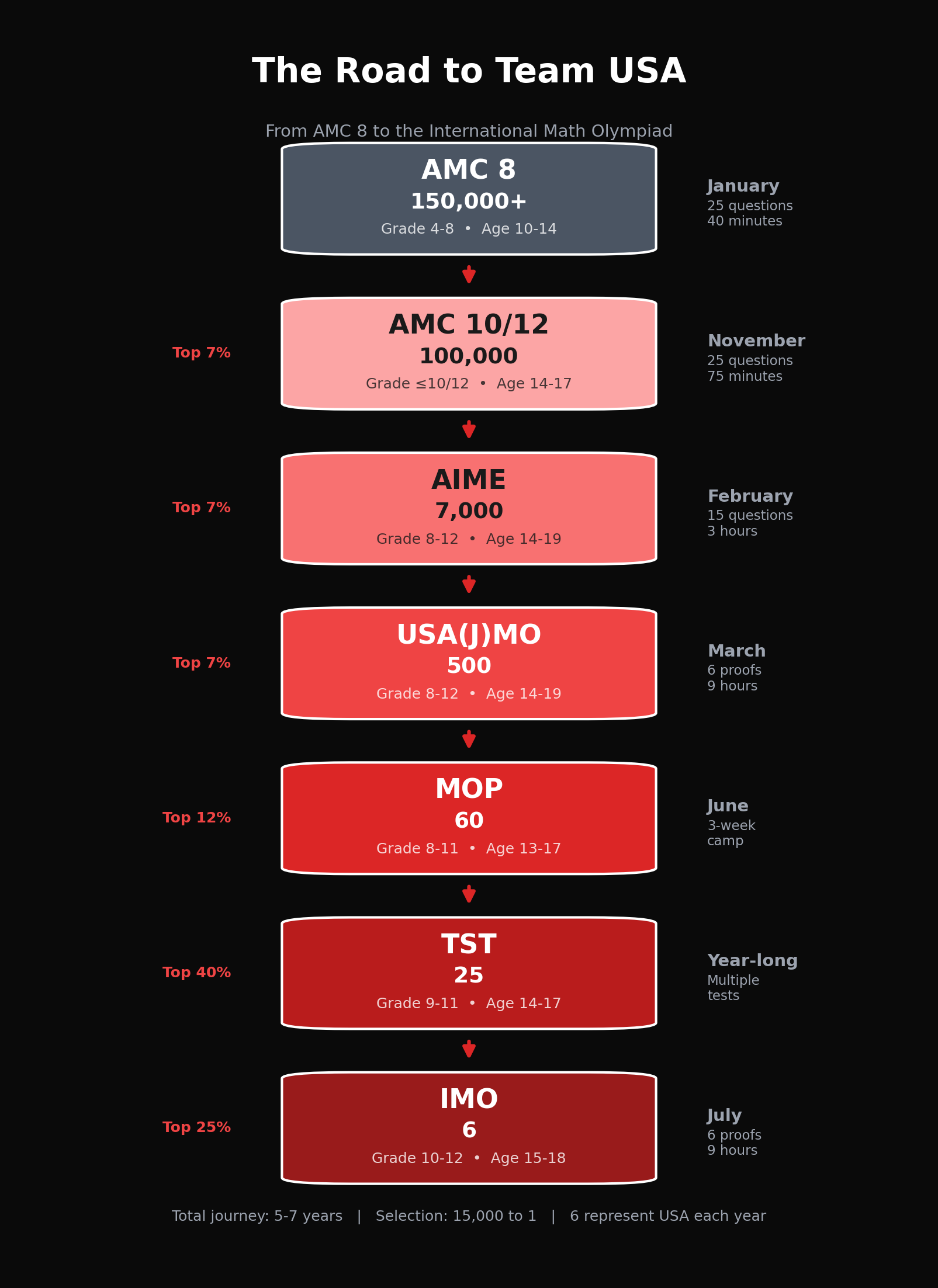
This is where most kids first touch competition math. It's a 25-question test, 40 minutes, multiple choice. You have to be in 8th grade or below, and under 14.5 years old.
The math itself isn't crazy advanced. It's middle school stuff. But the problems are tricky. They make you think in ways your regular math class probably doesn't.
 Madison Chung
Here's the thing though. AMC 8 doesn't actually lead anywhere in terms of qualification. You can't get to AIME or USAMO just from AMC 8. So why does it matter?
Because it's where the seed gets planted. A kid takes AMC 8 in 5th or 6th grade, struggles with some problems, maybe gets a few "aha" moments, and suddenly math feels different. More interesting. That's the real value.
Step 2: AMC 10 and AMC 12
This is where the actual selection process starts.
AMC 10 is for students in 10th grade or below, under 17.5 years old. AMC 12 is for 12th grade or below, under 19.5. Both are 25 questions, 75 minutes, multiple choice. They happen every November.
 Madison Chung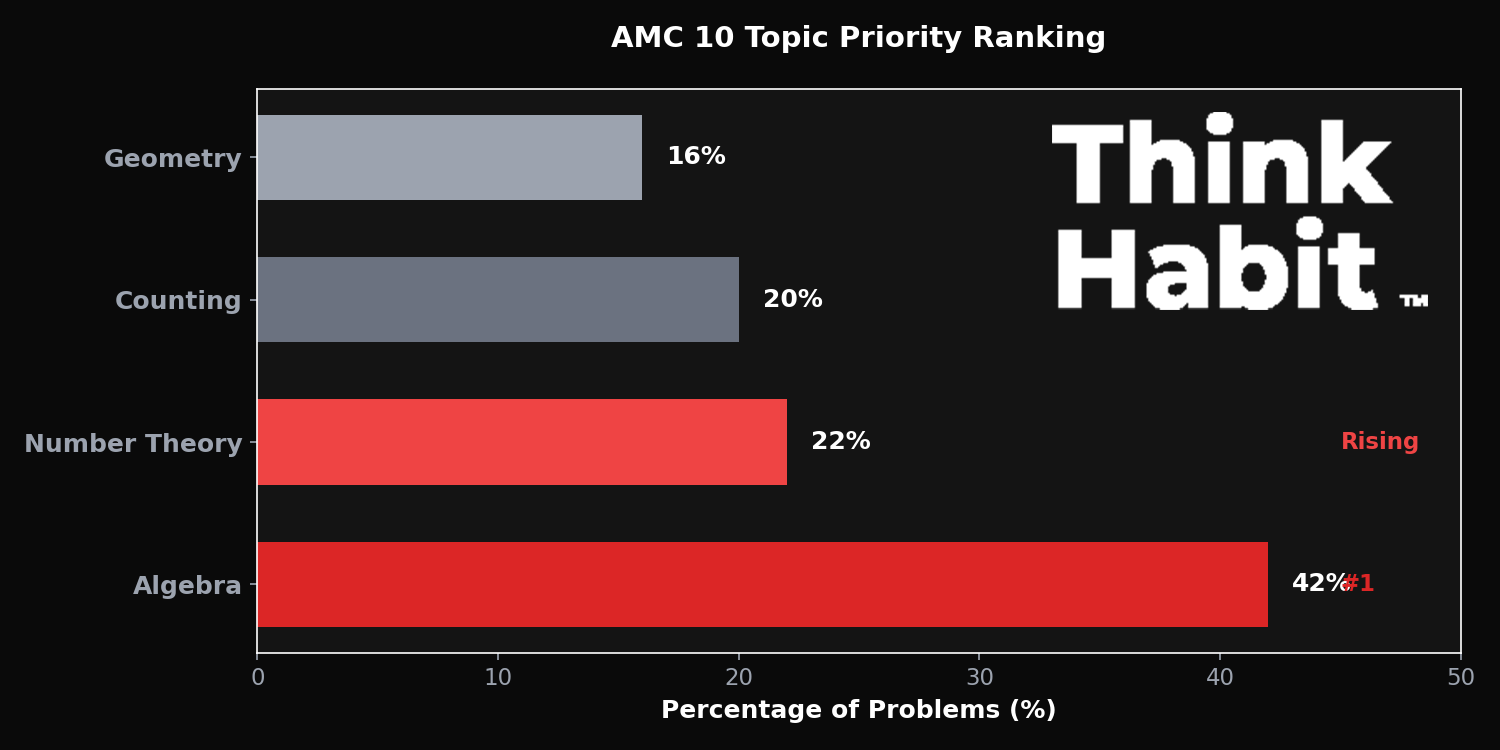
The scoring is a bit unusual. You get 6 points for a correct answer, 1.5 for leaving it blank, and 0 for wrong. So there's actually a penalty for guessing. Max score is 150.
If you do well enough, you get invited to AIME. "Well enough" means roughly the top 2.5% on AMC 10 or top 5% on AMC 12. In practice, that's usually somewhere around 90-105 on AMC 10 and 80-90 on AMC 12, but it changes every year.
Most kids take their first AMC 10 around 8th or 9th grade. Some start earlier.
 Madison Chung
Step 3: AIME
AIME is a different animal. 15 questions, 3 hours. No multiple choice. Each answer is an integer from 000 to 999. You either get it right or you don't.
About 6,000 to 7,000 students make it here each year. The problems are hard. Like, really hard. They often combine multiple topics in ways you haven't seen before. A single problem might need geometry, number theory, and clever algebra all at once.
Your AIME score gets combined with your AMC score to make an "index." Starting from 2025-2026, the formula is AMC + 20 × AIME. This index determines who moves on.
AIME happens in February.

Step 4: USAJMO and USAMO
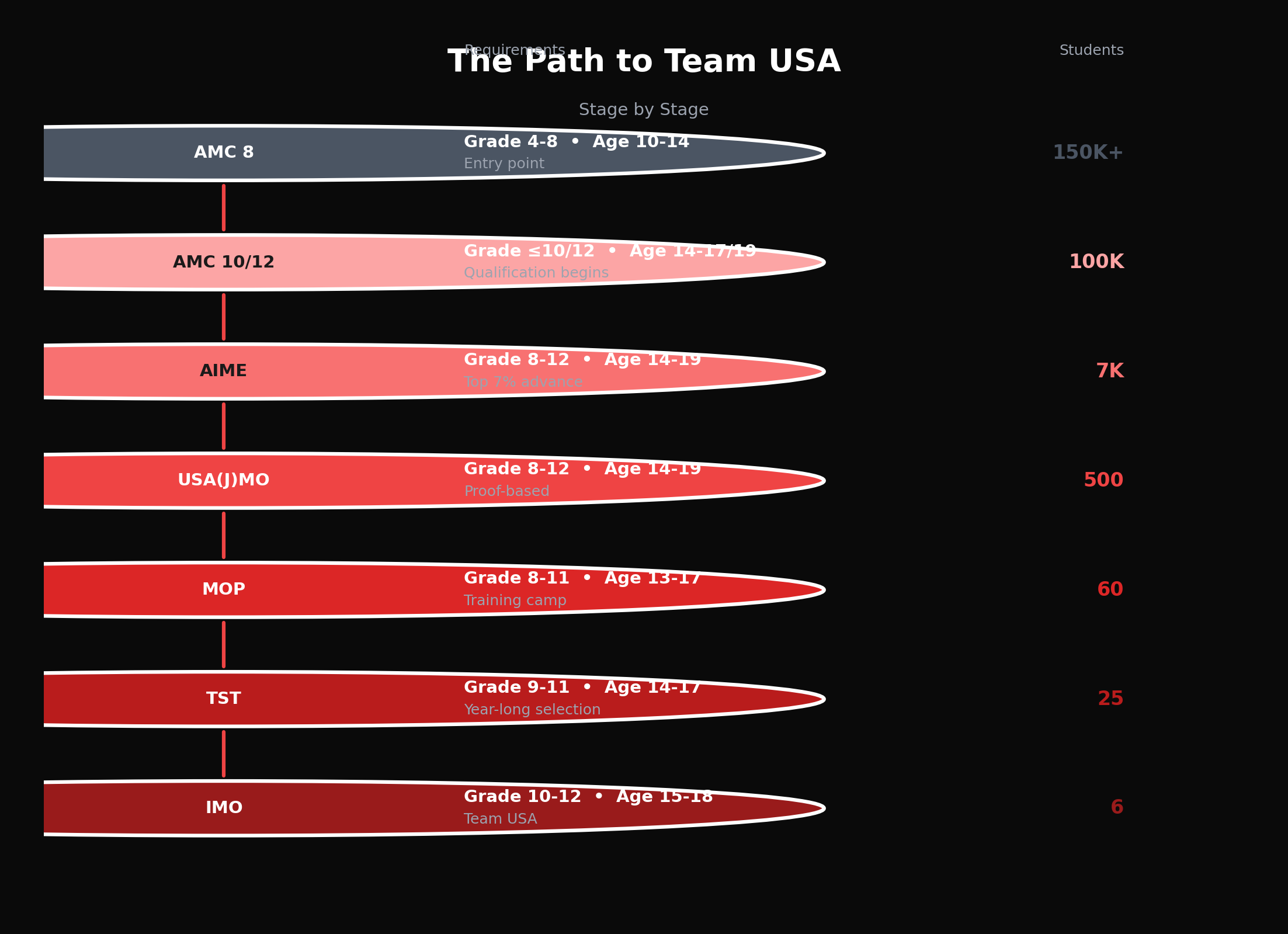
Now we're at the national olympiad level. About 500 students total get invited. Roughly 250 to USAJMO (for those who qualified through AMC 10) and 250 to USAMO (for AMC 12 qualifiers).
This is where everything changes. It's not multiple choice anymore. It's not even short answer. It's proof-based.
You get 6 problems over 2 days. 4.5 hours each day. 9 hours total to write complete mathematical proofs.

I want to be clear about what this means. You can't just get the right answer. You have to prove why it's right, with rigorous logic, no gaps. A small mistake in your reasoning can cost you most of the points on a problem.
Most students who've been doing well on AMC and AIME hit a wall here. The skills are just different. You need to learn how to write proofs, how to think deeply about a single problem for an hour or more, how to communicate mathematical ideas clearly.
The exam is in March.
Step 5: MOP
MOP stands for Mathematical Olympiad Program. It's a three-week summer camp for the top performers on USAMO and USAJMO. About 60 students get invited.
Who gets in? Roughly: the 6 IMO team members from last year, the top 18 or so non-graduating USAMO scorers, about 12 younger USAMO scorers (9th-10th grade), the top 12 USAJMO scorers, plus some additional female students being considered for the European Girls Mathematical Olympiad.
You can't go to MOP for the first time as a graduating senior. That's because the IMO selection process actually starts at MOP the summer before.
At MOP, students get divided into groups. Black, Blue, Green, Red. Black is for the strongest, including last year's IMO team and those closest to making it. The training is intense. Daily classes, problem sets, practice tests.
At the end of MOP, there's something called TSTST. Team Selection Test Selection Test. Yes, that's really what it's called. How you do on this determines if you continue in the selection process.
Step 6: Team Selection Tests
Here's where it gets really serious. The IMO selection takes an entire school year.
After MOP, the top scorers on TSTST keep going through a series of tests. Multiple rounds of Team Selection Tests and quizzes throughout the year. The format is similar to IMO: 3 problems, 4.5 hours.
By May, they narrow it down to 6. Those 6 will represent the US at IMO in July.
One important thing: you basically can't make the IMO team without having attended MOP the previous summer. The selection process requires it.
Step 7: IMO
The International Mathematical Olympiad. Started in 1959 in Romania with 7 countries. Now over 100 countries participate.
6 problems, 2 days, 4.5 hours per day. All proof-based. Each problem is worth 7 points, max score is 42.
Gold medals go to roughly the top 1/12. Silver to the next 2/12. Bronze to the next 3/12. About half of all participants get some medal.
The US team has done really well in recent years. Often finishing first or second overall.
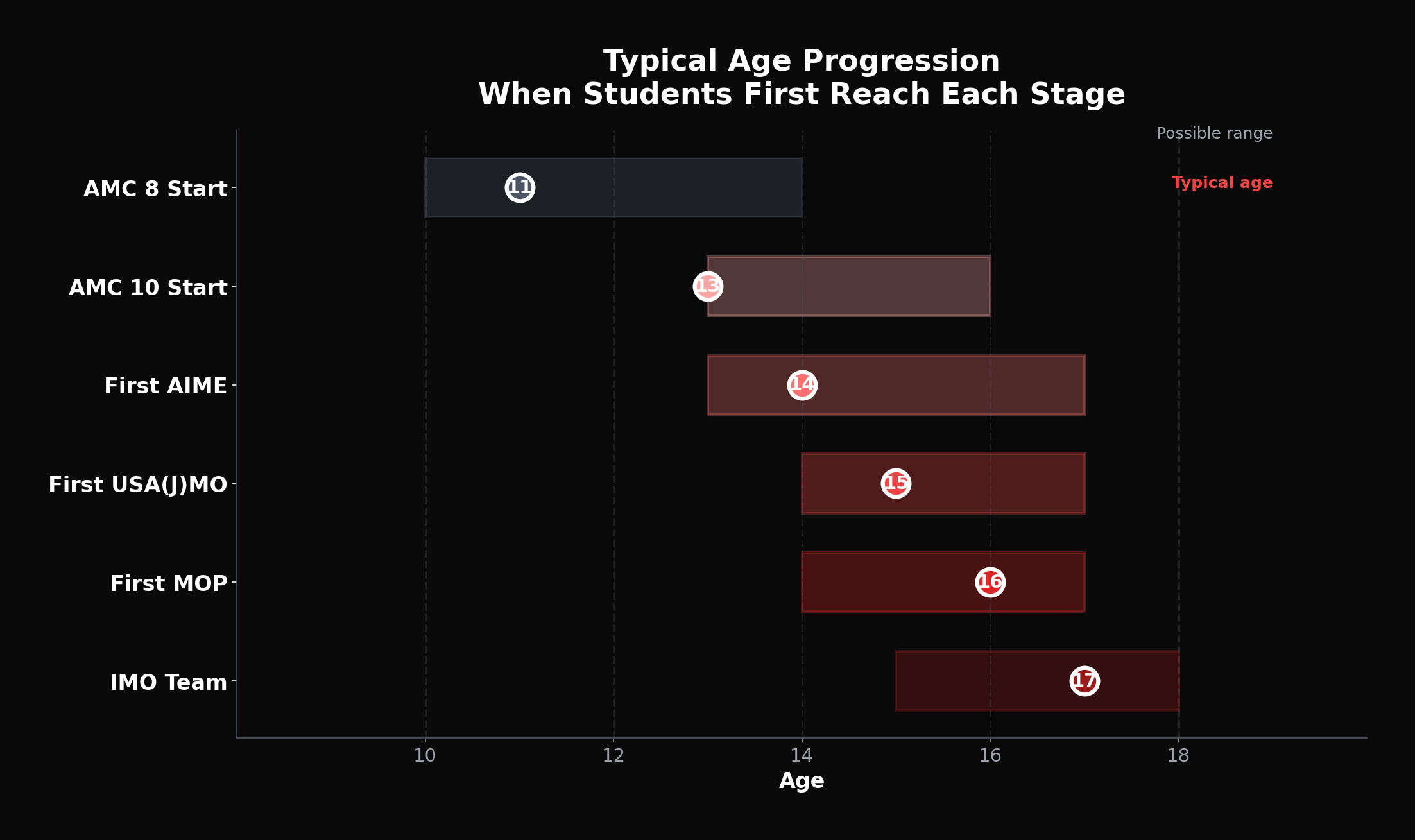
The Typical Timeline
So what does this actually look like for a student who makes it?
Around age 10-12, they take AMC 8. Get introduced to this world. Start enjoying hard problems.
Around 13-14, they take AMC 10 for the first time. Maybe qualify for AIME. Experience how much harder things get.
Around 14-15, they score well enough to make USAJMO. First time writing proofs under competition conditions. It's humbling.
Around 15-16, they do well on USAJMO and get invited to MOP. Probably start in the Red or Green group. Meet other kids who love math as much as they do.
Around 16-17, they return to MOP. Move up to Blue group. Do well on TSTST. Enter the year-long TST cycle.
At 17, they make the team. Represent the US at IMO.
That's the typical path. But there's a lot of variation. Some kids move faster. Some join later. A few exceptional ones have made the team at 14 or 15.
The Numbers
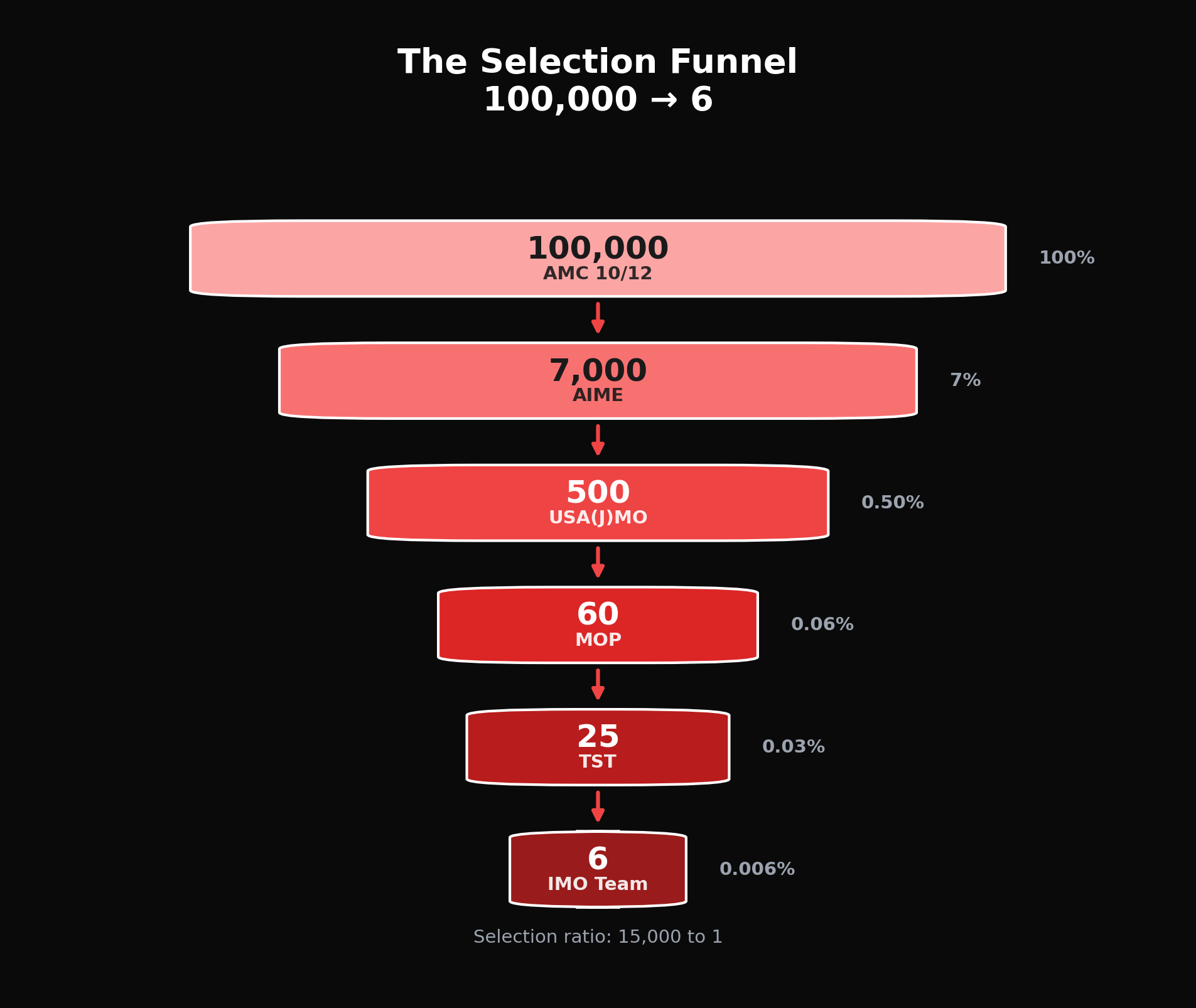
Let me put this in perspective.
About 100,000 students take AMC 10/12 each year.
About 7,000 make AIME.
About 500 make USA(J)MO.
About 60 go to MOP.
About 25 continue through TST.
6 make the team.
That's roughly 15,000 to 1.
What I Actually Think About All This
Here's what I want to say, and this is just my personal view.

Making the IMO team is incredibly hard. Most students who start this journey won't get there. That's just the reality.
But honestly? I don't think that's what matters.
What I've seen over the years is that kids who really throw themselves into this come out different. And it's not because of the medals or the recognition. It's because of what happens when you spend your teenage years genuinely wrestling with hard problems.
You learn that you're capable of more than you thought. You learn that being confused isn't something to run from. You learn that the best feelings come from breakthroughs that took real struggle.
These lessons stick with you. They apply to everything in life, not just math.

So my honest take is this: if your kid is drawn to this kind of challenge, let them go for it. Not because they might make IMO. But because the journey itself is worth it.
Spending your adolescence deeply engaged with something difficult. Surrounded by others who care about the same things. Learning to push through frustration and find joy in hard-won understanding. That's a pretty good way to grow up.
The results matter less than the process. The trophies matter less than the habits of mind.
And those habits, once formed, stay with you forever.