Why AMC 8 Might Be the Best Thing You Can Do for Your Child in the Age of AI

I've been thinking a lot about what education should look like now that ChatGPT can pass the bar exam and AI can diagnose cancer more accurately than some doctors. When any question gets a "good enough" answer in seconds, what exactly should we be teaching our kids?
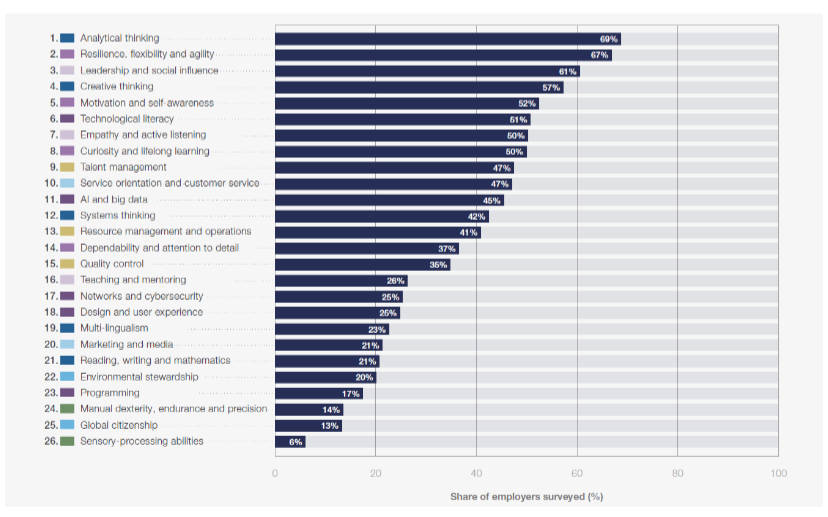
Here's what I keep coming back to: the skill that matters most isn't knowing things anymore. It's figuring things out.
And that's exactly what AMC 8 trains.
The Problem with How We Teach Math Today

Let me be honest. The way most schools teach math doesn't make sense for the world our children are growing up in.
The stated goal of math education is always something like "developing mathematical reasoning and problem-solving abilities." Sounds great on paper. But walk into an actual classroom, and what do you see? Students memorizing formulas, plugging numbers into equations, and practicing the same type of problem over and over until they can get the right answer quickly.
The goal says creativity. The content says memorization.
This worked fine fifty years ago. Back then, being able to calculate things accurately and quickly was a valuable skill. But we're not living fifty years ago. We're living in a time when AI can solve any calculation in a fraction of a second. Training kids to do what machines do better and faster doesn't prepare them for anything.
The deeper issue is that school math problems are designed so that each question tests one concept. Know the formula, apply it correctly, get the answer. This is fine for checking whether students understood the lesson, but it does almost nothing for developing actual thinking skills.
What Makes AMC 8 Different
AMC 8 is a math competition for middle school students, organized by the Mathematical Association of America. It covers topics that students already learn in school, things like arithmetic, basic geometry, and introductory statistics. The content isn't advanced.
But here's the thing: even though the topics are familiar, the problems are not.


AMC 8 problems require what educators call "problem-solving skills." You can't just recognize a problem type and apply a memorized method. You have to actually think about what the problem is asking, consider different approaches, and often combine multiple concepts in ways you haven't seen before.
Richard Rusczyk, who founded Art of Problem Solving and won the US Mathematical Olympiad back in 1989, explained it well. He said that standardized tests like the SAT have problems where knowing one principle is enough to find the answer. But AMC problems require deep understanding because you have to combine different principles to solve a single problem.
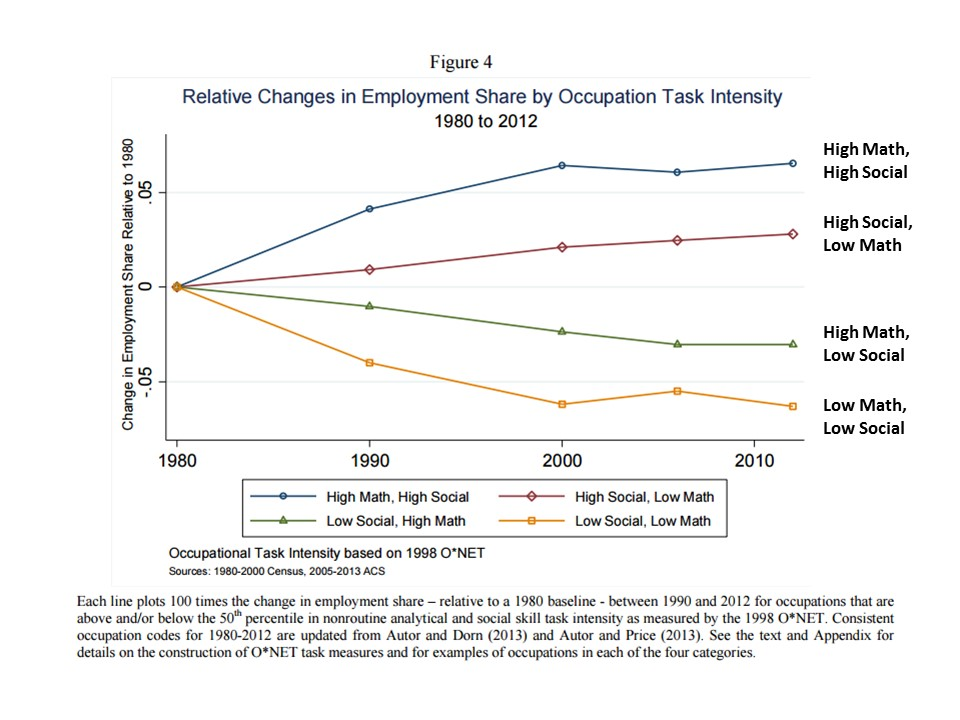
He also said something that stuck with me: "In the modern world, knowledge alone has no value. Through the internet, information that was once inaccessible is now available to everyone. Knowing something is no longer enough. You have to know what to do with that knowledge."
He wrote that years before ChatGPT existed, and it's even more true now.
Why I Recommend Starting with AMC 8
I'm not suggesting you push your child into intense competition prep. That's not the point.
What I am suggesting is that AMC 8 offers something that regular school math doesn't: practice with unfamiliar problems.
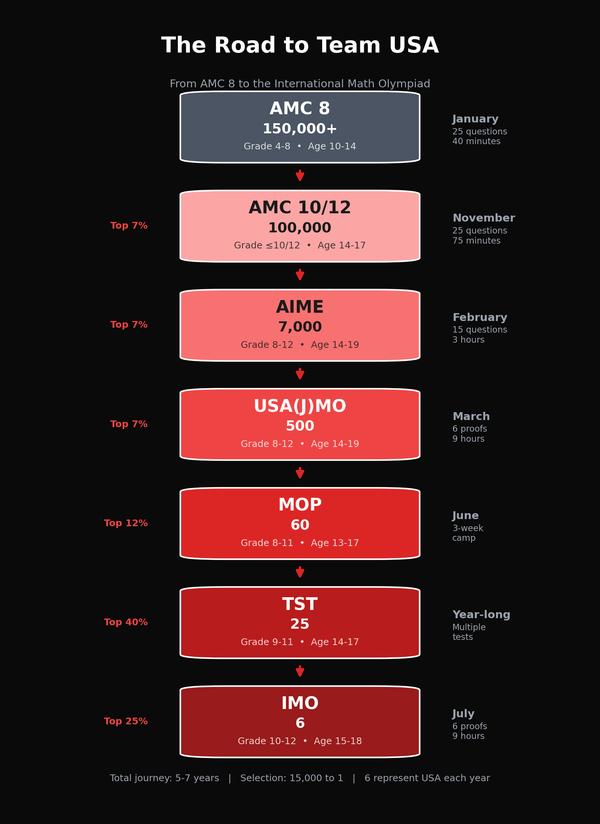
The barrier to entry is low. If your child has learned middle school math, they can try AMC 8. It's 25 multiple choice questions in 40 minutes. No special preparation is required to participate.
Your child probably won't score perfectly the first time. That's fine. The value isn't in the score. The value is in the experience of sitting with a problem that doesn't look like anything from the textbook and having to figure out an approach from scratch.
This is the exact skill that AI cannot replace. Machines are excellent at pattern matching and applying learned procedures to similar situations. What they struggle with is novel problem-solving, making unexpected connections between ideas, and approaching unfamiliar challenges creatively.
When your child wrestles with an AMC 8 problem and thinks "wait, what if I try looking at it this way," they're building exactly the kind of mental flexibility that will matter in an AI-driven world.
It's Not About Winning Trophies
Let me be clear about something. I'm not saying every child should aim for high scores or try to advance to AIME or any of that. Those paths exist for students who are exceptionally talented and passionate about mathematics, and that's wonderful. But that's not what this is about.
What I'm saying is simpler. School math has become too focused on procedures and not focused enough on thinking. AMC 8 problems fill that gap. They take concepts your child already knows and ask "okay, but can you actually use these ideas when the situation isn't straightforward?"
That question, more than any formula or algorithm, is what the future will demand.
The students who thrive in an AI-powered world won't be the ones who memorized the most facts or mastered the most procedures. They'll be the ones who learned how to approach problems they've never seen before. Who learned how to think.
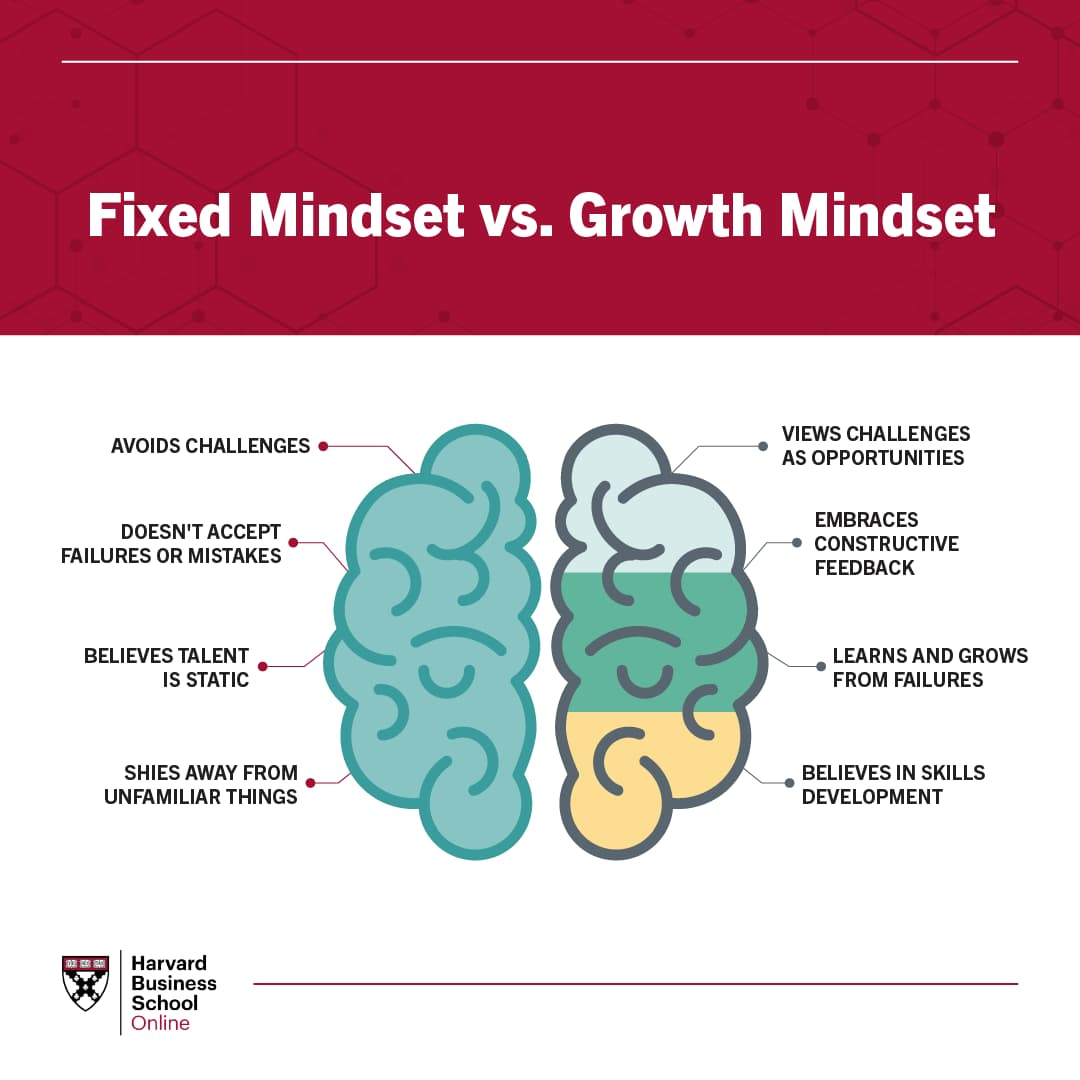
Moser, J. S., et al. (2011). Mind Your Errors: Evidence for a Neural Mechanism Linking Growth Mind-Set to Adaptive Post-Error Responses. Psychological Science.
AMC 8 is one way to practice that. It's accessible, it's not overwhelming, and it exercises exactly the mental muscles that matter most right now.
Your child doesn't need to become a math olympiad champion. They just need opportunities to solve problems that actually require problem-solving. In my view, that's not optional anymore. It's basic preparation for the world they're inheriting.

I'm a math coach at Think-Habits, and this is what I care about most. Going forward, I'll be sharing how AMC can help develop the problem-solving abilities that truly matter in the age of AI. My goal is to help you build the kind of thinking that will make a real difference in the world you're about to step into. -Madison Chung