Why Kangaroo Math Might Be the Perfect Starting Point for Your Child in the Age of AI

ChatGPT can pass the bar exam. AI can diagnose cancer more accurately than some doctors.
When any question gets a "good enough" answer in seconds, what exactly should we be teaching our kids?
I keep coming back to the same conclusion: what matters now is not knowing things. It's figuring things out.
And there's no better place to start building that skill than Kangaroo Math.
What Is Kangaroo Math?
Kangaroo Math is an international mathematics competition held every year on the third Thursday of March. More than 6 million students from over 90 countries participate annually.
It started in France in 1991, inspired by an Australian math competition. The name pays tribute to those Australian colleagues. Today, it's run by an international organization called Kangourou sans Frontières, which translates to Kangaroo without Borders.
Here's what makes it different from most competitions.
First, it starts at Grade 1. Most serious math competitions don't begin until middle school. By the time kids reach AMC 8, many have already decided they "aren't math people." Kangaroo catches them earlier.
Second, everyone gets something. Every participant receives a certificate, a t-shirt, and a small gift. This isn't designed to make kids feel like failures. It's designed to make them want to come back.
Third, the test format is approachable. Students get 75 minutes. Grades 1 through 4 answer 24 questions, while Grades 5 through 12 answer 30 questions. All multiple choice, five options each. Questions are worth 3, 4, or 5 points depending on difficulty. Wrong answers don't subtract points.
The barrier to entry is low. The experience of real thinking is high.
The Philosophy Behind Kangaroo Math
The organization behind this competition has a stated mission that I find refreshing.
https://mathkangaroo.org/mks/ (you can visit Kangaroo official site)
They aim to spread the love of mathematics, encourage mathematical education in schools, and create a favorable perception of mathematics in society.
Read that again. A favorable perception of mathematics.
Most math competitions exist to find the best. Kangaroo Math exists to make more kids think math is interesting. That's a fundamentally different goal, and it shows in how the problems are designed.
School Math vs. Kangaroo Math
Let me be honest. The way most schools teach math doesn't make sense for the world our children are growing up in.

The stated goal of math education is always something like "developing mathematical reasoning and problem-solving abilities." Sounds great on paper. But walk into an actual classroom and what do you see? Students memorizing formulas, plugging numbers into equations, practicing the same type of problem over and over until they can get the right answer quickly.
The goal says creativity. The content says memorization.
This worked fine fifty years ago. Back then, being able to calculate things accurately and quickly was a valuable skill. But we're not living fifty years ago. AI can solve any calculation in a fraction of a second now. Training kids to do what machines do better and faster doesn't prepare them for anything.
Kangaroo Math problems are different.
A typical school math problem might ask you to calculate 7 times 8 plus 3.
A Kangaroo-style problem might ask this: Anna has some candies. She gives half to her brother, then eats 3. Now she has 5 left. How many did she start with?
The second problem requires the same basic arithmetic. But it demands thinking backward, understanding the sequence of events, and building a mental model of the situation.
This is the key competence Kangaroo tests. Not pure knowledge of formulas, but the logical combination of concepts.
Why This Matters in the Age of AI
The World Economic Forum's Future of Jobs Report identifies Analytical Thinking and Complex Problem-Solving as the top skills for 2025 and beyond.

These aren't skills you develop by memorizing multiplication tables or practicing the same type of problem repeatedly.
These are skills you develop by facing unfamiliar situations and figuring out what to do.
AI is excellent at pattern matching. Show it a million examples of a problem type, and it will solve the million-and-first faster than any human. But what AI struggles with is novel situations that don't match previous patterns, problems requiring creative reframing, and understanding context to make unexpected connections.
This is exactly what Kangaroo Math trains. The problems are deliberately designed so that you can't just recognize and apply. You have to actually think.
The Think-Habit Framework: Value, Attitude, Method
At Think-Habits, we believe that building real problem-solving ability requires three things.

The first is Value, which we call Thinking Ability.
The core value isn't getting the right answer. It's developing the capacity to think.

When a child struggles with a Kangaroo problem and eventually figures it out, something happens in their brain. They're not just learning math. They're learning that thinking works. That persistence pays off. That their mind is capable of solving things that initially seemed impossible.
This is the real value. Not the medal. Not the score. The experience of genuine thinking.
Brain activity research shows that the brain activates differently when confronted with difficult, unfamiliar problems. The true value of Kangaroo Math lies not in winning trophies but in strengthening the muscles of the brain.
The second is Attitude, which we describe as Joyfully and Willingly.
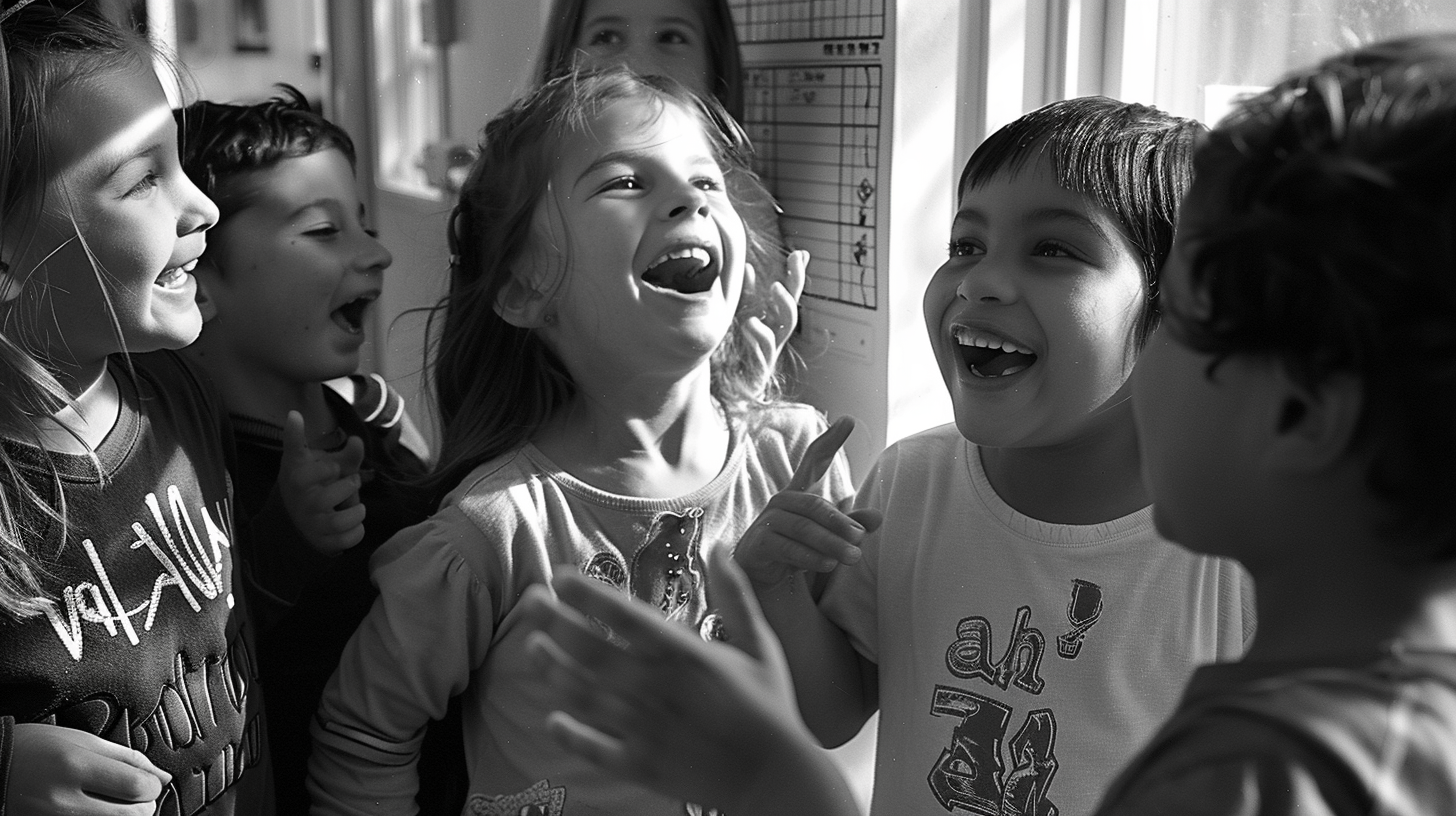
This is where Kangaroo Math really shines.
Most math competitions feel like tests. High stakes. Stressful. Kids either succeed and feel relief, or fail and feel defeated.
Kangaroo Math feels more like a game. The problems are often quirky and fun. Everyone gets a gift. The emphasis is on participation, not just winning.
This matters because you cannot force thinking. A child who approaches problems with anxiety and dread won't develop real problem-solving skills. They'll develop test-taking survival strategies.
But a child who approaches problems with curiosity, who actually wants to figure things out, that child will develop the mental muscles that matter.
The attitude has to be: I'm doing this because I want to, not because I have to.
Kangaroo Math naturally creates this attitude. The problems are fun, and every child gets recognized regardless of the outcome.
The third is Method, which we call the Flow of Thinking or Process.

This is the actual problem-solving process itself.
Kangaroo problems naturally teach a thinking flow. Read carefully and ask what is actually being asked. Visualize and ask whether you can draw it or imagine it. Identify the pattern and look for the underlying structure. Work backward and consider how you would verify the answer if you knew it. Check and ask whether your answer makes sense.
This isn't a formula to memorize. It's a flow of thinking that becomes habitual over time. And once it becomes habitual, it applies to everything. Not just math problems, but any situation requiring analysis and reasoning.
Why Kangaroo Math Is Perfect for Younger Children
Here's something important. Kangaroo Math starts at Grade 1.
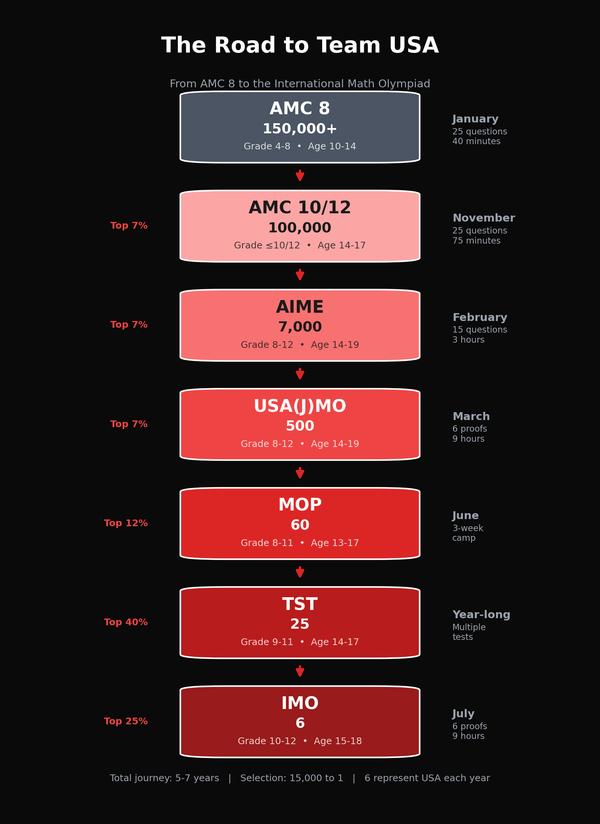
Most serious math competitions don't begin until middle school. AMC 8 is for students up to grade 8. AMC 10 is for high schoolers. By the time kids encounter these competitions, many have already decided they aren't math people.
Kangaroo Math catches them earlier. A first-grader can participate. A second-grader can earn a medal. By the time these kids reach middle school, they've already had years of positive experiences with mathematical thinking.

This early exposure matters enormously. Research consistently shows that attitudes toward math solidify early. If you want a child to develop genuine problem-solving ability, you need to start before they've decided math is boring or scary.
Kangaroo Math vs. AMC: Different Goals, Both Valuable
Some parents ask whether their child should do Kangaroo Math or AMC.
Here's how I think about it. They're not competitors. They're complements.
Kangaroo Math builds the foundation. It teaches kids that thinking is fun, that math can be playful, and that problem-solving is something they're capable of. The primary goal is building a love of math. It starts in first grade. The atmosphere is fun and encouraging. The difficulty curve is gentle. It's best for building foundations.
AMC builds on that foundation. Once a child has the attitude and basic thinking skills, AMC provides the challenge and rigor to push them further. The primary goal is building competitive skill. It starts in sixth through eighth grade. The atmosphere is serious and challenging. The difficulty curve is steep. It's best for testing mastery.
The ideal path might be Kangaroo Math in elementary school, then AMC 8 in middle school, then AMC 10 and 12 in high school.
 Madison Chung
How to Get Started
If you're interested in having your child try Kangaroo Math, here's what you need to know.
Registration opens in mid-September each year. The competition date is the third Thursday of March. The cost is $21 for regular registration or $35 for late registration. Test centers are available nationwide, and there are online options as well. The official website is mathkangaroo.org.
The website has practice problems and past exams. I'd recommend having your child try a few problems without pressure. See if they find them interesting. If they do, that's a good sign.
The Bottom Line
In the age of AI, what you know matters less than how you think.

Kangaroo Math isn't about producing math prodigies. It's about producing kids who think, who actually engage their minds rather than just applying memorized procedures. Kids who enjoy and approach challenges with curiosity rather than dread. Kids who persist and keep working even when the answer isn't immediately obvious. Kids who connect and see relationships between ideas and apply them in new situations.
These are the skills that will matter when our children enter a workforce transformed by artificial intelligence. These are the skills that will matter when they face problems that no one has seen before.
And the best part? You can start building these skills in first grade.
Your child doesn't need to be a math genius. They don't need special preparation. They just need the opportunity to engage with problems that actually require thinking, in an environment that makes thinking feel worthwhile.
That's what Kangaroo Math offers. And in my view, that's exactly what the age of AI demands.
Curious about how Kangaroo Math compares to other competitions, or how to prepare your child? Leave a comment below, and I'll share more about building thinking habits that last.